
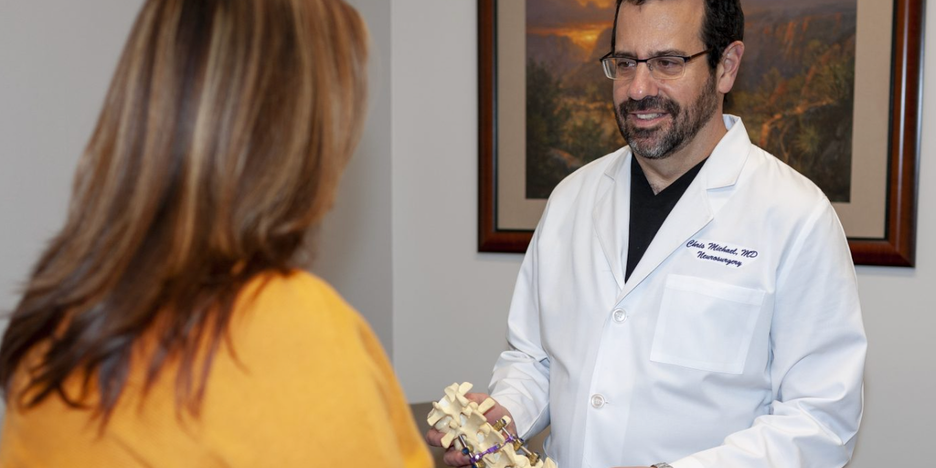
Finding the right doctor for spine or nerve symptoms can feel confusing, especially when pain starts affecting work, sleep, or time with family. Many Dallas-area patients are not sure whether they need a primary care doctor, an orthopedic specialist, a pain physician, or a Dallas neurosurgical practice. Understanding what Dallas neurosurgical care involves can make that decision easier. At Texas Neuro-Spine Surgery, Dr. Chris Michael helps patients sort through symptoms, review imaging, and decide whether conservative treatment is still worth pursuing or whether to discuss surgery.
What Dallas Neurosurgical Care Involves
Dallas neurosurgical care focuses on conditions affecting the brain, spine, and nerves, although many patients see a neurosurgeon for back or neck problems rather than brain concerns. A Dallas neurosurgical specialist is trained to evaluate whether symptoms stem from a structural issue in the spine or pressure on a nerve. That evaluation often includes a detailed conversation about your symptoms, a physical exam, and, when needed, a close look at imaging.
At Texas Neuro-Spine Surgery, we don’t rush into surgery. The process begins by understanding where the pain is coming from and how it affects everyday life. Dr. Chris Michael takes time to explain findings in practical language so patients understand the issue, possible treatment options, and likely next steps.
Conditions Treated In Dallas Neurosurgical Care
Many people searching for Dallas neurosurgical help are dealing with common spine conditions that have become persistent or more difficult to manage over time. Dr. Michael treats herniated discs, spinal stenosis, degenerative disc disease, nerve compression, cervical conditions, and lumbar conditions. Each of these problems can cause different symptoms, which is why a careful evaluation matters.
A herniated disc may press on a nerve and cause pain that travels into the arm or leg. Spinal stenosis may narrow the space around the spinal cord or nerves and lead to pain, numbness, or trouble walking. Degenerative disc disease can cause pain that worsens with sitting, bending, or lifting. Cervical spine problems may affect the neck, shoulders, arms, and hands, while lumbar issues often affect the lower back and legs. A Dallas neurosurgical specialist helps determine which problem is actually driving the symptoms.
Why Patients Often Start With A Dallas Neurosurgical Practice
Many patients are surprised to learn that a Dallas neurosurgical practice may be the right place to start when pain has not improved with rest, medication, or physical therapy. A neurosurgeon is not only for severe brain surgery or emergency cases. Spine-related symptoms often need a closer structural evaluation, and a neurosurgeon can help determine whether the issue may still improve with conservative care or whether surgery should be considered.
At Texas Neuro-Spine Surgery, the first question is not “What operation should be done?” The first question is “What is causing the problem, and what is the least invasive way to treat it?” That perspective is important for patients who want thoughtful answers instead of a rushed recommendation.
Dr. Chris Michael’s Conservative-First Philosophy
One thing that sets Dr. Michael apart in Dallas neurosurgical care is his conservative-first philosophy. Many spine and nerve problems can still benefit from non-surgical treatment, especially when symptoms have not yet become severe or progressive. Physical therapy, medication management, injections, and activity changes may still help depending on the diagnosis.
At Texas Neuro-Spine Surgery, conservative care is part of the decision-making process from the start. Dr. Michael believes in exhausting reasonable non-surgical options before recommending surgery. That approach can reassure patients who want to know surgery is considered carefully, not automatically. For many people, that measured process is one of the main reasons they seek a Dallas neurosurgical provider.
Minimally Invasive Spine Surgery At Texas Neuro-Spine Surgery
When surgery is needed, Dr. Michael often uses minimally invasive techniques when appropriate. Minimally invasive spine surgery is designed to treat the problem through smaller incisions and with less disruption to nearby tissue than traditional open surgery. That may lead to a different recovery experience for some patients, with less early discomfort and a quicker return to daily activity in selected cases.
At Texas Neuro-Spine Surgery, minimally invasive options may be considered for a range of spine conditions depending on the anatomy and the source of the problem. Dr. Michael evaluates whether the procedure is likely to help and whether it fits the patient’s overall health and goals. A Dallas neurosurgical practice should offer both judgment and technical skill, and Dr. Michael’s approach combines both.
Dr. Chris Michael’s Background And Credentials
Patients looking for Dallas neurosurgical care often want more than a treatment plan. They want to know who is providing that care. Dr. Chris Michael is a board-certified neurosurgeon who has spent many years treating patients in Dallas. His training at Duke University and Baylor College of Medicine gave him a strong clinical foundation, and his long tenure at Baylor University Medical Center reflects years of experience treating patients with spine and neurologic conditions.
Recognition also matters when patients are choosing a doctor. Texas Neuro-Spine Surgery highlights honors from D Magazine, Castle Connolly, and U.S. News, which help show how Dr. Michael has been recognized within the medical community. Those credentials support what patients often notice in the exam room: careful explanations, patient-focused planning, and a thoughtful approach to treatment.
What To Look For In Dallas Neurosurgical Care
A good Dallas neurosurgical provider should help patients feel informed, not overwhelmed. That starts with clear communication. It also includes a willingness to explain what the imaging shows, how that fits with the symptoms, and what treatment options may still be available before surgery is considered. Patients should feel that their concerns are being taken seriously and that the plan makes sense for their situation.
At Texas Neuro-Spine Surgery, Dallas neurosurgical care should feel practical and personal. Every patient’s condition is different, and the right treatment isn’t always the most aggressive. For some patients, that means continuing conservative treatment. For others, it means discussing a minimally invasive procedure that could address the source of pain more directly.
What A Visit May Look Like
A visit to Texas Neuro-Spine Surgery usually begins with a conversation about symptoms, what treatments have already been tried, and how pain or nerve problems are affecting daily routines. Dr. Michael reviews imaging carefully and explains the findings in plain language so patients understand the problem and the reasoning behind each recommendation. If surgery is not needed, the team may continue conservative care and monitor progress over time. If surgery becomes appropriate, the team clearly discusses the next steps so patients know what to expect.
This process is an important part of Dallas neurosurgical care because it helps patients feel less uncertain. Knowing what the doctor sees and why a particular plan is being suggested can make a difficult decision easier to manage.
Final Thoughts And Next Steps
If you are searching for Dallas neurosurgical care, Dr. Chris Michael and Texas Neuro-Spine Surgery offer a thoughtful, patient-first approach to spine and nerve conditions. From herniated discs and spinal stenosis to degenerative disc disease and cervical or lumbar problems, Dr. Michael works to understand the cause of the symptoms before recommending a treatment path. His board certification, training at Duke University and Baylor College of Medicine, long tenure at Baylor University Medical Center, and recognition from D Magazine, Castle Connolly, and U.S. News all help set him apart.
If spine pain or nerve symptoms are affecting your life, schedule an appointment at Texas Neuro-Spine Surgery to learn whether conservative treatment or a minimally invasive option may be the right next step.
Sources
Texas Neuro-Spine Surgery. Home page. https://texasneurospinesurgery.com/
Texas Neuro-Spine Surgery. About Us. https://texasneurospinesurgery.com/about-us/
Texas Neuro-Spine Surgery. Minimally Invasive Spine Surgery. https://texasneurospinesurgery.com/minimally-invasive-spine-surgery/
Texas Neuro-Spine Surgery. Meet Dr. Chris Michael, M.D., Dallas Neurosurgeon. https://texasneurospinesurgery.com/meet-dr-chris-michael-m-d-dallas-neurosurgeon/
Mayo Clinic. Back Surgery: When Is It a Good Idea? https://www.mayoclinic.org/diseases-conditions/back-pain/in-depth/back-surgery/art-20048274
AAOS OrthoInfo. Minimally Invasive Spine Surgery. https://orthoinfo.aaos.org/en/treatment/minimally-invasive-spine-surgery/
Disclaimer: The information provided in this blog is for educational purposes only and is not intended as medical advice or a substitute for professional medical consultation, diagnosis, or treatment. Always seek the advice of your physician or another qualified healthcare provider with any questions you may have regarding a medical condition. Never disregard professional medical advice or delay seeking it because of something you have read on this website.
If you are experiencing a medical emergency or other serious symptoms, call 911 immediately or go to the nearest emergency room.
Individual results may vary, and not all patients are candidates for minimally invasive spine surgery. Consult with Dr. Chris Michael or another qualified spine specialist to determine the best treatment plan for your specific needs.